I’m being just plain greedy. I took a sabbatical from my sabbatical.
Right now, I’m in a “gap year,” working on a few personal projects:
- Book project
- Start-ups:
- Traffic safety system
- Railroad monitoring system
I just took a break from the projects to travel, taking an extended trip to the UK to see family and friends, visiting places I haven’t been since childhood, and exploring the history of preservation and tourist railways. After living abroad for 7 years, I felt I had grown apart from Britain. Now, 31 years after first coming to the US, it was time to re-evaluate how I felt about my homeland. You can call this an extended vacation, but at very few people get a month in a lump to travel. My agenda also included learning and growth as much as family time. I choose to see this as a travel sabbatical.
A few years ago, in 2019, I had another squeezed-in trip to the UK to see family and friends. I flew to the UK on the 13th of July, with the return on the 21st. It was packed with the usual visits to my sister and my dad. Looking at Google Photos as a reminder of where and when I see that the trip was a rough out and back.
- Up the M1 to visit a dear friend in Derby.
- Over The Pennines by way of “The Cat and Fiddle” to see my dad, aunts, and uncles in Lancashire.
- Returned over “The Cat and Fiddle”, via Matlock Bath to my sisters in Nottinghamshire, with a side trip to Lincoln.
- Down the M1 to Leicestershire to visit my cousin and attend her son’s wedding.
- Back down the M1 to Heathrow for the flight.
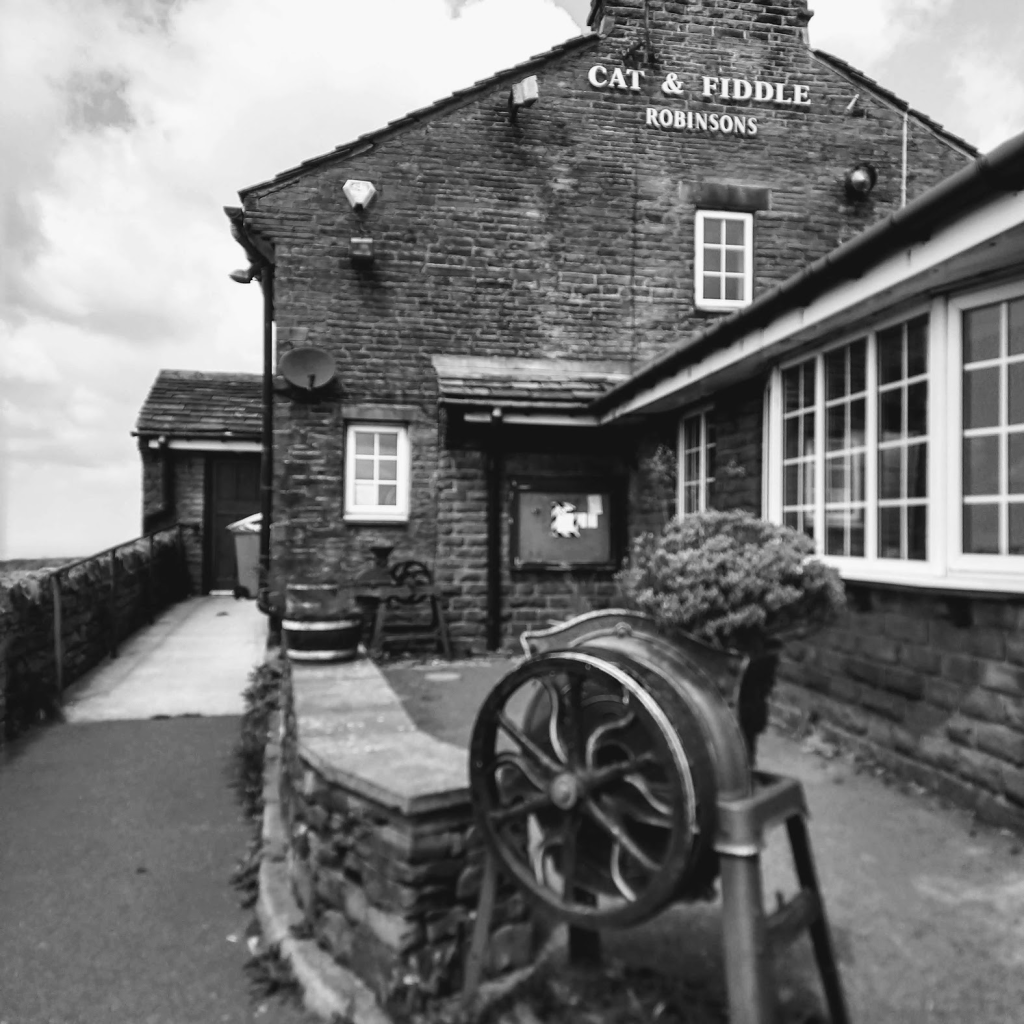
Seven days on the ground, seeing a dozen relatives, exploring Lincoln for the first time since I was 5, getting a steak pudding during a shopping trip to Southport, ice cream in Matlock Bath, bacon bap from a van in a lay-by on the A523, fish and chips, and a wedding. I mean, you can’t get more iconically British than that mix. Well, London, but I think Blake said all that needs to be said on that note. I returned home exhausted. I then vowed “Next year I’ll spend 3 weeks in the UK”.
2020 started well travel-wise. I grabbed myself a long weekend in Orange and LA counties, renting a lovely rag-top Mustang and visiting Griffith Park, The Queen Mary, Venice, and the Angeles National Forest. I also got to hang out with my SoCal friends. I was in a company with DTO and a healthy attitude to vacation and personal space. I felt optimistic about my 2020 travel plans.
Then Covid.
My plans went on hold for a few years. During “The Pandemic” a corporate restructuring (acquisition) changed vacation policy, and project demands limited the chance for a big break. Another wedding invite showed up for a nephew in July 2024.
This invite showed up in September 2023. I don’t usually get to plan travel so far ahead. I was monitoring the progress of the project to see how much time I could ask for. I wanted at least a week, maybe a day or so to recover after – but working from home, I could ease back in with a blend of work and naps. Do I ask for the 3 weeks? Well, I was already asking for a month off to work on my book, so I couldn’t ask for too much.
And then I was impacted by a reduction in force. I realized I would be working for a new company when I was traveling. If they offered PTO (paid time off), I’d probably have to go negative with that; if DTO (discretionary time off), how cheeky could I be? I’d already had plans for the book project sabbatical, so the lay-off date simply became the start of the sabbatical, fitting it in naturally. I didn’t expect the shift from the book project to the multiple start-up projects. When I realized my position was freelance/self-employed, I suddenly saw my 3-week trip as being possible.
Travel sabbaticals are part of your personal growth, often involving learning about a new part of the world or taking in bucket list locations. For me, it was about reconnecting with family and my homeland as much as it was about ticking off bucket list locations.
The bucket list, for me, was kinda short. I’ve been watching a few UK crime dramas set in the Southwest, specifically the Bath and Bristol area, and I realized I hadn’t been to that part of the world in forever. I even had a work project related to the Second Severn Crossing and had been there on a few trips with work, so was interested in revisiting part of my personal history.
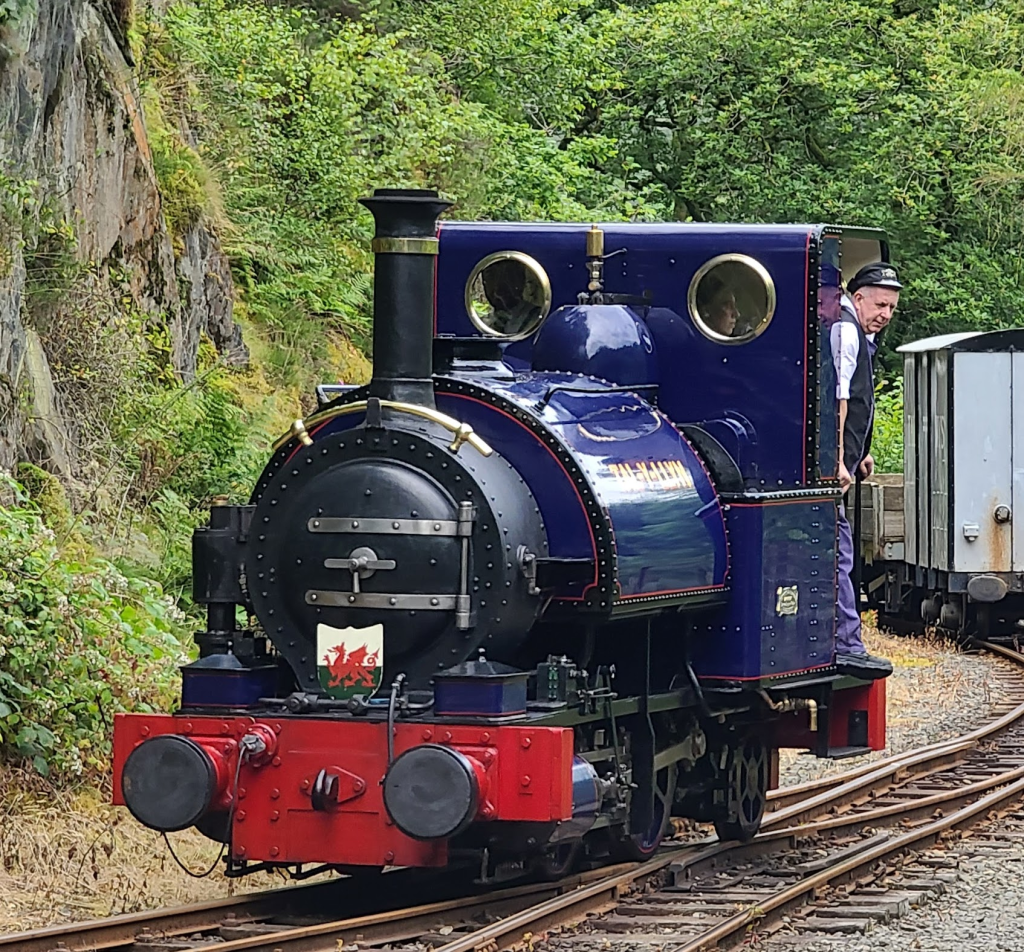
Inspiration for Skarloey in The Railway Series.
For some reason, I had never been to the Talyllyn railway. This railway is the oldest preservation line in the world and was featured in The Railway Series by the Rev. Awdry. Visiting a friend in the North East made Beamish another easy option. My friend agreed to visit Beamish with me but also kept mentioning Locomotion, an extension to The National Railway Museum in Shildon. I appealed to his boss to let him see both; that was easy as he, too, is self-employed. My sister knows my love of railways. She had decided to surprise me with a day trip on the Severn Valley Railway. I also spotted it when researching Shropshire, where she now lives, so I spoilt her surprise. You can see how my ambition to see one railway turned into a central theme for the whole trip.
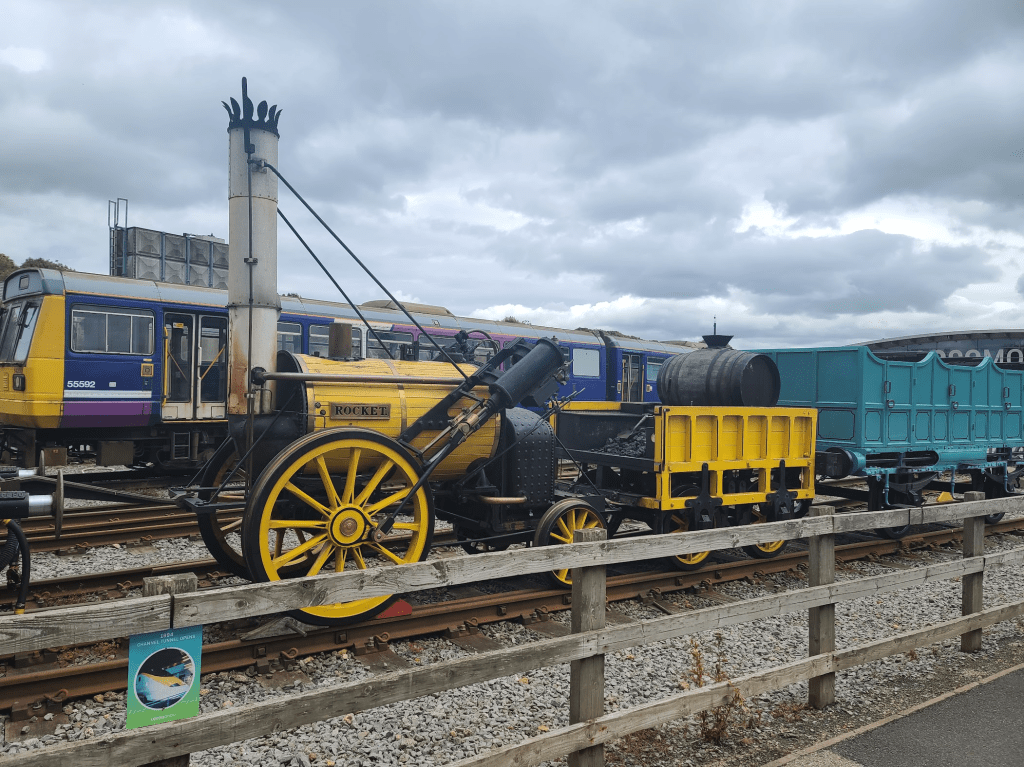
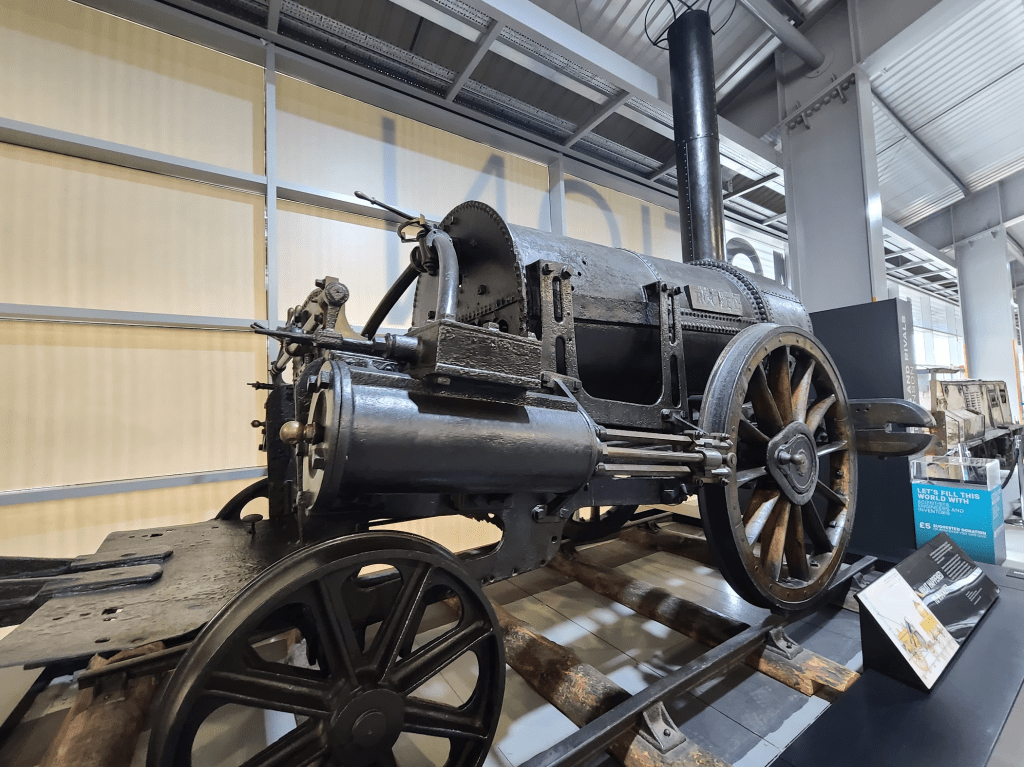
Portmeirion had been sneaking up as a destination, and a recent rewatch of “The Prisoner” made it a must-see. The architecture of Clough Ellis Williams is delightful and appeals to me. Other intended architectural sights included the Clifton Suspension Bridge, and whatever castle or cathedral happened to be en route.
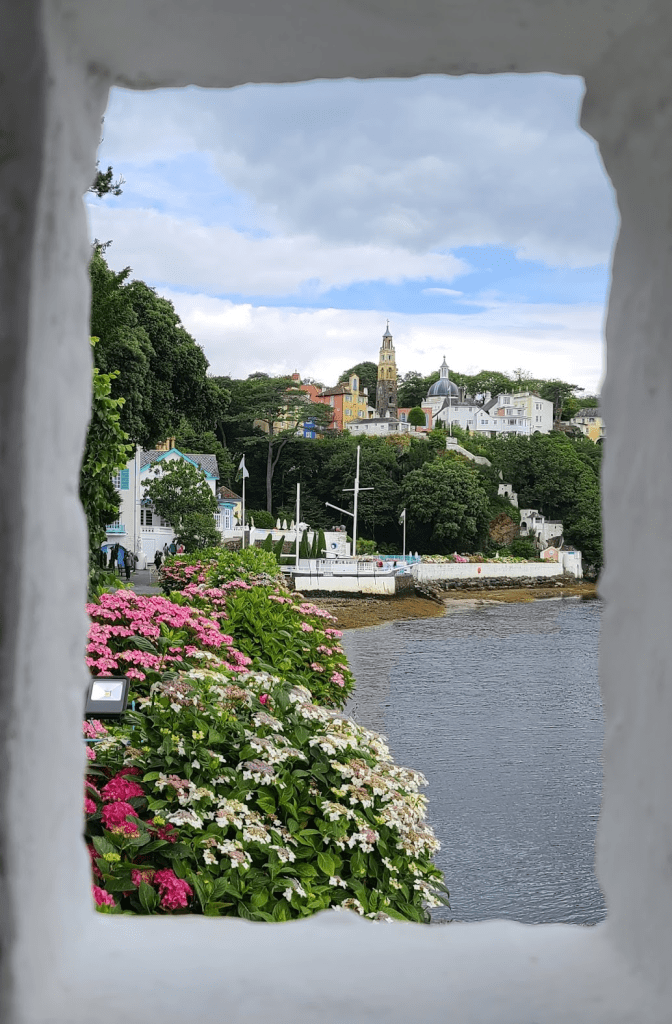
A delightful Mediterranean village in North Wales.
A place to lose yourself in art, architecture, and nature.
“Be seeing you!”
Rather than going point to point between relatives’ and friends’ homes, I planned to actually tour and see what was between destinations and not just motor along. The plan was also to limit travel to under 100 miles per day, allowing me a chance to actually enjoy the country.
Travel probably should be about the places and people, not about your career. You should put your work brain on hold and let other things fill your heart, soul, and lungs. Maybe that’s easily done by others, but I found an urge to engineer almost every day.
My current modus operandi in a museum is to look at the technology used to present the information. This includes simple things like the addition of QR codes in place of placards and complex things like projected animations onto textured surfaces and relief maps.
Infrastructure is everywhere; How do you pay? How do you park? How do you check in to a hotel? Do they really still have physical keys? When did they start striping roundabouts like this? You can’t help but look at the results and wonder about what was engineered, what was designed “by committee,” what was deployed without an understanding of capability, and what features are gated by administrator ability?
I spent time planning travel logistics, sometimes even just in time, as I spotted an interesting diversion between towns. What will be open, and when? Who is available for coffee, lunch, or dinner? Who can put a roof over my head? Which is the shortest, and which is the prettiest route?
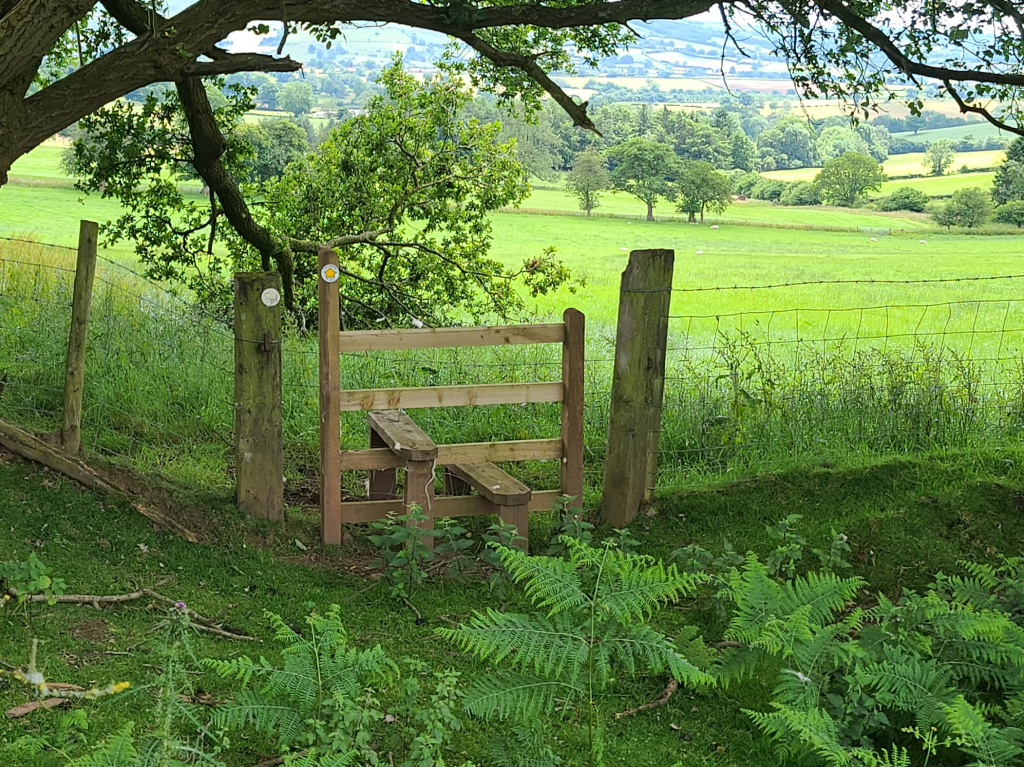
I even composed a blog post – mentally – on a walk from Buxton to Solomon’s Temple, a tourist destination in the Peak District. I passed a set of movable goalposts on a playing field, which got me thinking about project goals. Don’t we often complain about “moving the goalpost?” I then passed through a succession of kissing gates, stiles, and other livestock barriers that permit walkers. It kept me reflecting on the engineering process and how each gate has criteria to be met. The trail markers on the gate posts showed the path names rather than the destinations but were often accompanied by prohibitions and warnings. I’m still pondering that one and will write it in the coming weeks.
I love engineering and technology museums. During my trip I visited Newark Air Museum, Locomotion, The Silk Museum in Macclesfield, Jodrell Bank, The SS Great Britain, Talyllyn Railway, Welsh Highland Heritage Museum, The Clifton Suspension Bridge, The Severn Bridge, The Ribblehead Viaduct, The Severn Valley Railway, and the Bridgenorth Cliff Railway. Even the non-engineering places, like Beamish, had significant engineering content. Maybe this was a “bus-man’s holiday.” Looking at how problems were overcome in other industries.

Lifeboat recovery.
Even a trip to a beach presents wonderful sights for an engineer to see.
Even a visit to the Rollright Stones, several ancient burial sites marked by standing stones, turned into physics and geology as I met a couple who were dowsing, looking for energy lines. We got some consistent results with homemade copper dowsing rods. In the 70s, I remember a lot of “no one knows how” discussions on TV. I’d never thought to revisit the topic until that day in the Cotswolds.
Apart from learning some neat information about railway and mill technology, I did learn more about myself. This was planned to be a leisurely tour of the UK, seeing family and friends. However, I could not rest. In the evenings, I resented my being tired as it meant I was missing out on sunset strolls. Staying with family meant that I couldn’t start the day until everyone else had woken up. Sure, I managed some journaling and letter writing, Duolingo French lessons, and daily puzzles in the New York Times while waiting, but I couldn’t start the day trips until later.
I found that I am very adaptable. I had a plan to get around the country and see the must-see people and the must-see places. It was a circuit around England with a side circuit to North Wales. I encountered hiccoughs like a puncture in a rental car with no spare, and a friend suddenly rescheduled my visit, which had knock-on effects, causing an awkward, ampersand-shaped circuit in the end.

Not shown here is the wonderful universal spare they have.
Though it didn’t clear the front calipers of the Citroën C4, it did fit the rear.
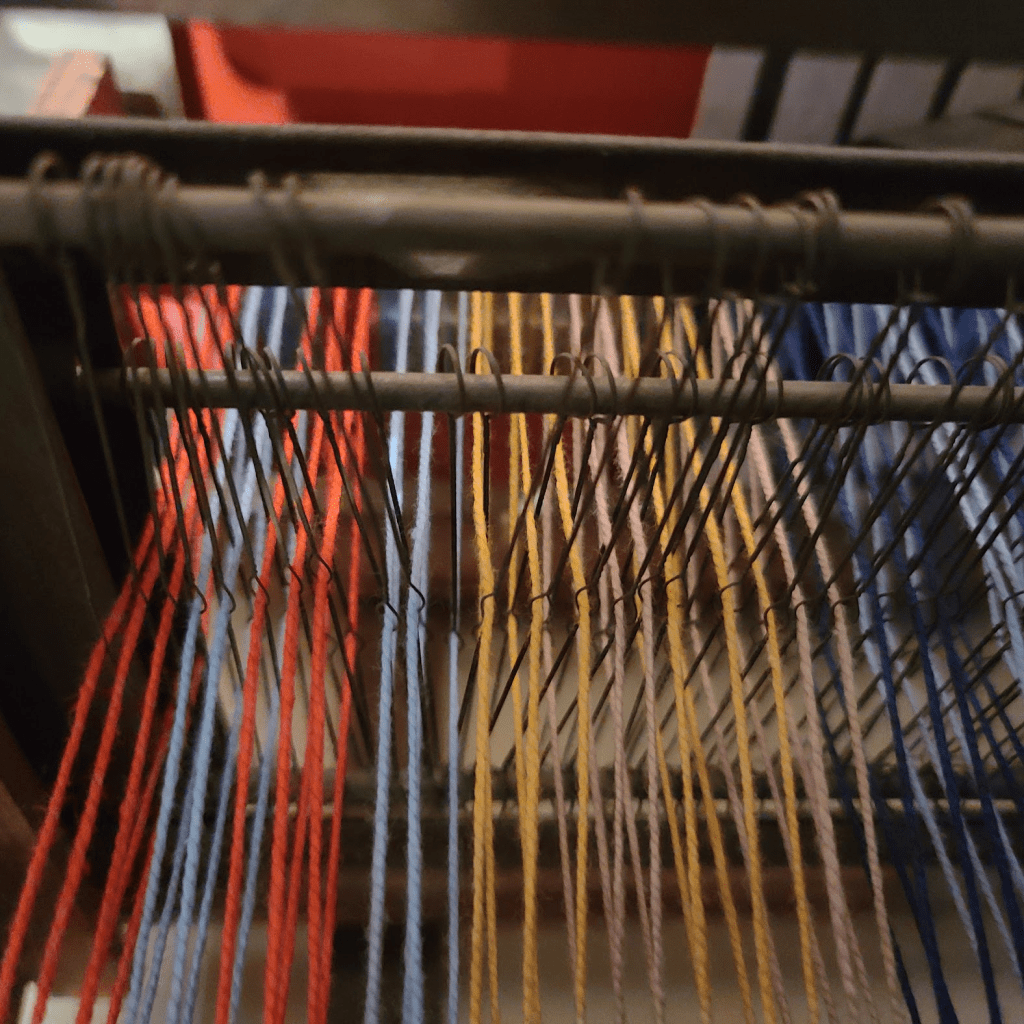
What should have been a small detour between Evesham and Leicester to Stratford became an insertion of Derby between Skelmersdale and Ludlow. This enabled a visit with my friend in New Mills, who was actually exhibiting that day at Railex in Buxton, making Buxton, the Silk Museum, and Jodrell Bank all candidate destinations that previously had been “too far off the planned route.” The Silk Museum, with its extensive display of Jacquard looms and punch cards, was unknown to me until I was adding the trans-Cheshire leg of the trip.
As days were added in the first half of the journey, others were shaved off the back. The UK closes on Sunday, except for tourism, which closes on Monday, so I had to be careful what that one or two-day shift meant as far as available attractions were. Really, this trip was much like being in a little start-up company. Priorities and responsibilities change daily and hourly.
Maybe I didn’t find I was flexible; maybe I just had it reinforced that my private persona and professional attitude are deeply connected. If this was the result of 30 years of startup work nurturing me or an innate trait I cannot tell.
I also learned that I have forgotten how Britain works. Little things like paying after pumping petrol and having no latch on the pump, you have to hold the trigger, so you can’t clean windows while you fill up. They bring the card reader to your table at the end of your meal; they have done so for decades; we have only recently seen that in California. And boy, are their roads tiny! You’d better eat before 5pm or be ready to not eat until 7:30pm, and you have to book tables in restaurants! The trick about leisure and tourism being closed early in the week is true in the US as much as in the UK.
Maybe I have it wrong. Maybe this was just a vacation from my projects. Maybe travel should be about resting your body and mind, not taxing your body, and experiencing different things. Still, having an extended time away from normality did feel good. I believe I learned new things about myself and the world. I do feel like restarting will be harder than if I’d had a shorter trip. Overall, I’m glad I did it.
I know I am in a very privileged position. I could take a month off. Three and a half weeks to travel and a four-day weekend to recover afterward. I could afford flights, car rentals, hotels, and restaurants. After 30 years of hard work, I know I have earned this. I don’t get back home every year, and a longer trip is proportionally cheaper. As an ex-pat, travel to the UK is actually budgeted for, with the constant concern over family emergencies.
I don’t believe everyone should take a traveling sabbatical; I know people who hate traveling for any reason. Some will want it; indeed, some need it. You can go to research a favorite topic, which, for me, is the railways; others may go for architecture, music, or history. You might be looking into your genealogy and ancestry. With dedicated time to focus within an appropriate physical, geological, or geographical environment that has the resources to hand, it’s not a vacation; you are actively pursuing a goal or interest. However, you can blend the two and take days off from your research. You are not obliged to take a travel companion; they may help or hinder you, depending on if they enjoy what you’re enjoying or if they can amuse themselves while you are busy.
If you do choose to take the plunge and partake in extended travel, I wish you every success and joy in the adventure. I’d love to hear your plans and the results. Bon voyage!
 Glorified Plumbing
Lovely reading Alex!
The next time you’re in Blighty try the Southeast. I’m now based halfway between Portsmouth and Southampton and we have some very nice railroads for you: The Watercress Line, between Alton and Alresford (they have Thomas the tank engine there), Swanage Railway going past Corfe Castle and the Isle of Wight Steam Railway with a nice museum. Would be great to catch up!
Peter R.
LikeLike
Thanks, Peter. I would love to catch up on one of my UK trips. They are few and far between. Even with 3 weeks, I had to skip the extremities, not getting to see you and other friends on the South coast, nor relatives in Scotland. You’ll have to remind me, were you with us on the River Severn cruise, when we demonstrated the PilotWatch case?
I’m glad you’re enjoying the blog.
LikeLike
Just so you know, despite several attempts I have found a grand total of 1 cache without you! I’m a bit rubbish at this.
LikeLiked by 1 person
About 15 years ago, my sister and family visited my mum and dad in Anglesey. They got within 10 ft of a Geocache horizontally and about 30ft vertically. The cliff was not scalable, and they wrote it off as an “unrecoverable cache.”
A year later I was there, and my mum and I were walking that same clifftop trail. She mentioned the impossible cache. I looked at where she pointed, and yes, it was a steep drop. I looked at the map and saw that they had the right place for the cache; it was below the drop. I stopped looking at the route from me to the cache, but took in the general terrain. I could see the cliff edge sloped down along the coast, and I looked for and found an easy switchback trail down to the cache.
It also doesn’t help that GPS is inaccurate. Most GPS systems will get you within 20ft of the target. And if you watch a reported location from a static GPS receiver you will see that location change over time as the satellite constellation passes overhead.
Don’t give up yet; you’ll get more as you practice.
LikeLike