Oh, how clichéd, an end-of-year post.
If I don’t do it, who will? Besides, the blog was relaunched in mid-November 2023. This is actually the anniversary of that event, though a few weeks late.
I knew taking a job would shift my priorities away from blogging. I also forgot that the last few companies I engaged with actively supported my transparency regarding our technology.
My current job is a 9-5, but I wake too early and often spend the first two hours (6:30 till 8:30) taking care of the admin issues or background learning. By the time I’m home in the evening and had my dinner, the last thing I want to do is spend more time on the computer.
I don’t believe my new employer forbids blogging, but I am mindful that they are an early-stage start-up. I have to be careful what secret sauce I share. If I talk about the idiosyncrasies of my IDE, target processor, or development language, I’m potentially giving away clues. Likewise, sharing daily successes and victories might be too much information to make public at this time. That makes it challenging to blog.
Yes, I could blog in general terms. I could find topics that are away from the here-and-now. That would need research, an extra effort I don’t have the bandwidth for. I could pick a topic and use AI to make a post. Where’s the fun in that? I enjoy the process, and I like sharing what I am learning as I learn it.
This blog is a passion project. It has not earned a single penny yet. If it were a passive income mechanism, I would be taking every shortcut to put out something marketable every week. I’d rather wait until I have time to write properly.
Don’t fear, I haven’t stopped writing. I do have technical documents to write at work. For expediency, I am leaning on AI tools there, both Claude and ChatGPT. They are okay for some tasks, but they also generate a large volume of text that needs cleanup. “Hey Claude, can you update our API documentation, especially where code has been added since the last spec was written?” Yeah, when you are in early development, you find use cases to add, and feature creep erodes away documentation. If you move too fast when coding, the docs become hard to update. Now I have a 50-page doc to review against our old Confluence page and the current codebase. At least 3 pages were error-free.
I did silently add a webpage. Alongside my oscilloscope set up for I2C, I added the text and tables for an SPI equivalent. I have not promoted that page for two reasons:
- I wanted to compare Google Search Hits – my I2C page gets a half dozen hits each week.
- I have not made any scope captures to illustrate the page. You would think I had a few spare captures lying around, but I don’t. Or if I do, they are on a PC in storage, not in the cloud or my writing MacBook.
There is also a new book. It’s still in stealth mode on LeanPub. I want to get another chapter in before I do a soft publication. It’s a little more whimsical than my other book.
Even though I’m not producing as much content as I used to, I will maintain my WordPress subscription, so you won’t see advertisements, and I will keep Grammarly to keep my sentences from rambling too long.
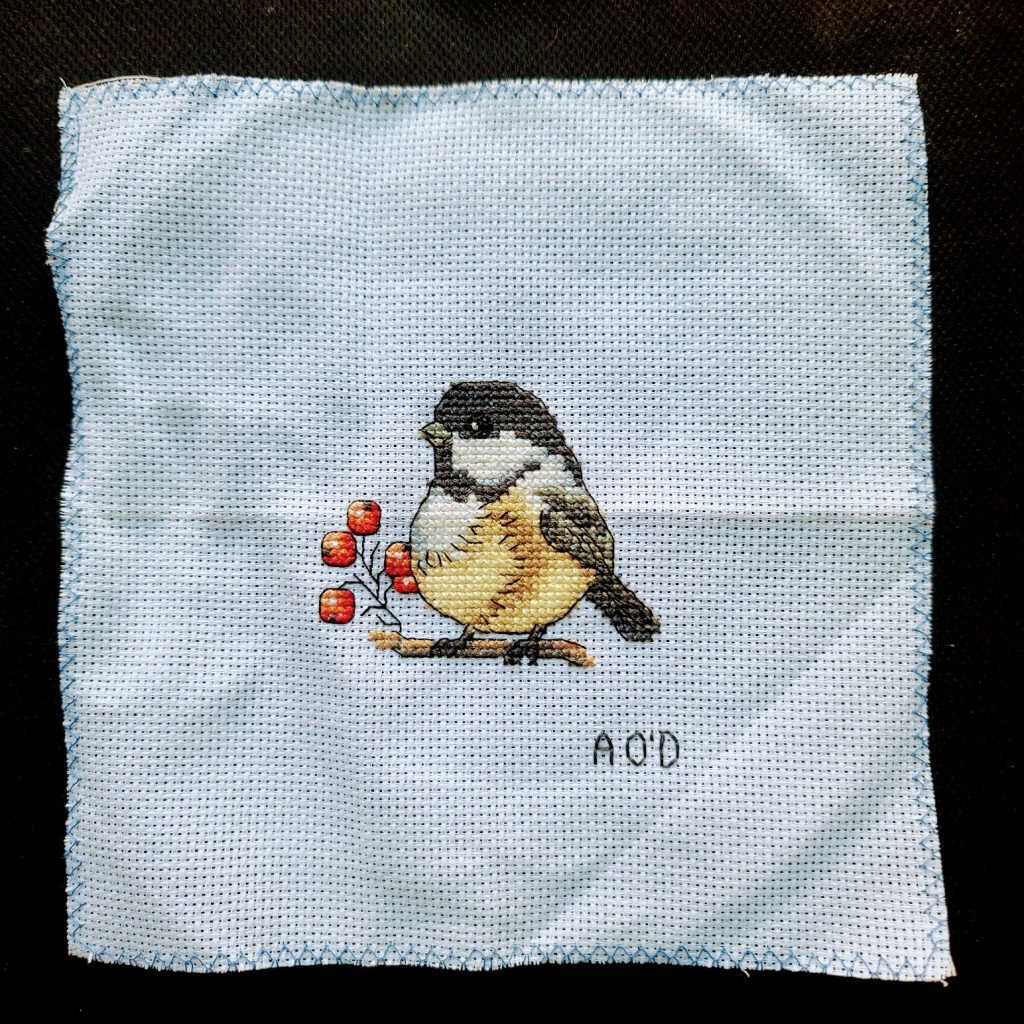
I have also added to my life balance by re-engaging in some arts and crafts. When my mother-in-law passed, we inherited her stash of unstarted cross-stitch projects. She had diligently wrapped up her in-progress work, but there were many patterns she’d bought and kitted up. I slowed down on UK-style tapestry (printed canvas cross stitch) as I had trouble telling colours apart. My MIL’s preference was counted cross-stitch. As long as you can keep a count, you don’t get your colours mixed up. Also in tapestry, you have to look at the printing and determine which colour should dominate at each cross. I basically learnt the computer graphics technique of anti-aliasing at the age of ten when working on complex tapestries. Suffice it to say, I took on a few simple projects, but we sold most of them via a craft consignment store.
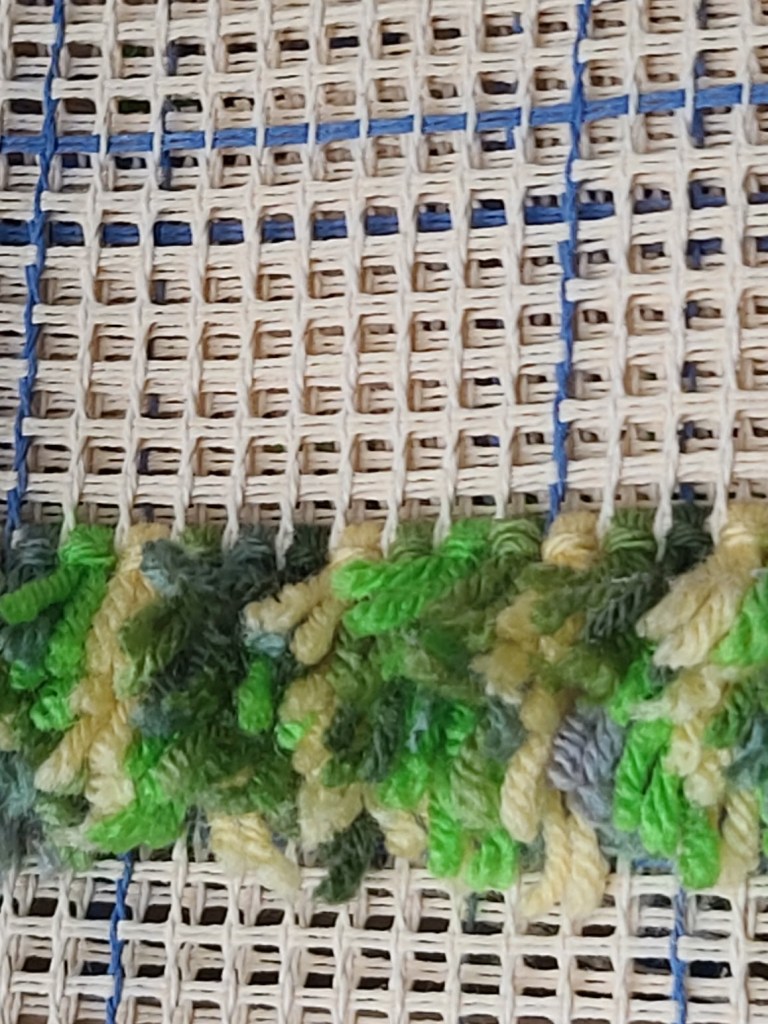
My other fibre art of choice is latch-hook rugging. I kitted up a new project a few years ago, but then scared myself with the enormity and complexity. Yes, I’ve done 3’x3′ canvases before, but they were simple geometric and abstract compositions. This one is based on a photo. It uses a plain canvas and will ultimately be impressionistic rather than photorealistic, but still, it feels like a bigger commitment, stretching my skills.
 Glorified Plumbing